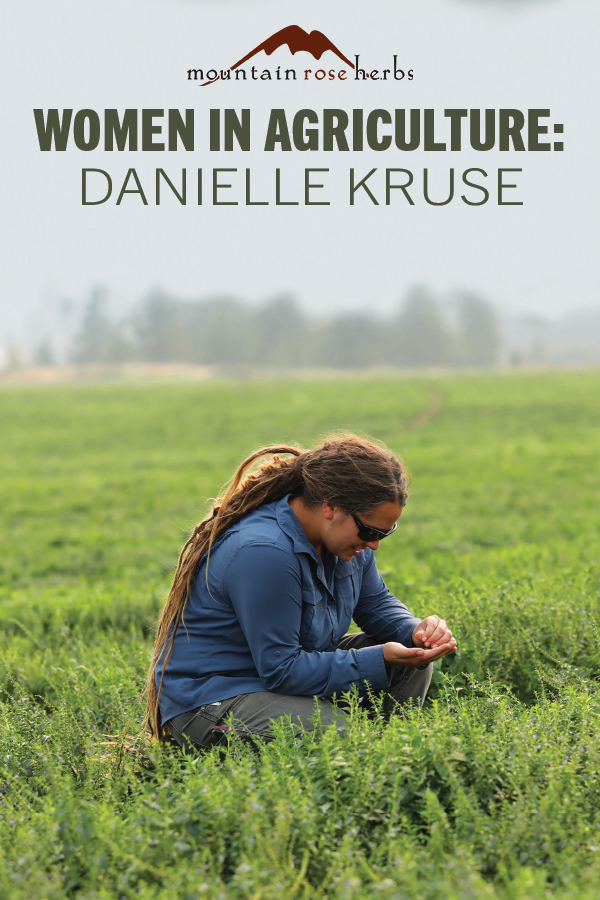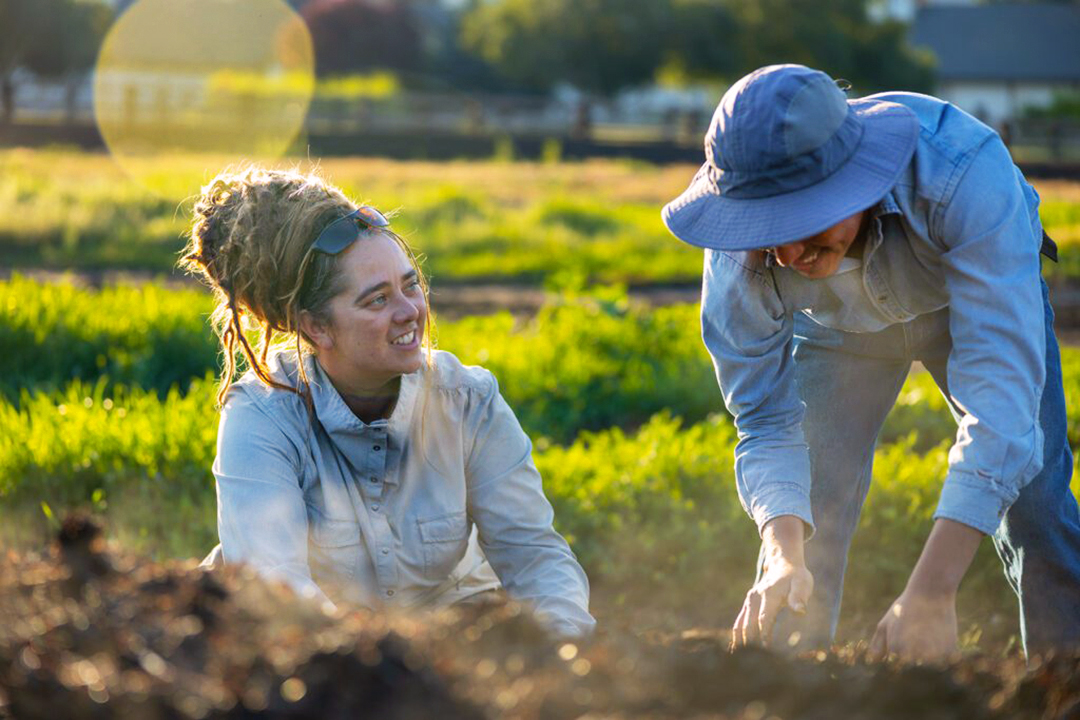
This year, the United Nations declared 2026 the International Year of the Woman Farmer. This effort is an important step in highlighting the often-overlooked work of women in food and wellness systems around the world. It is also raising awareness about the unique challenges women face in agriculture. This inspired us to reach out to some of our women farm partners to learn more about their personal experiences and share their stories.
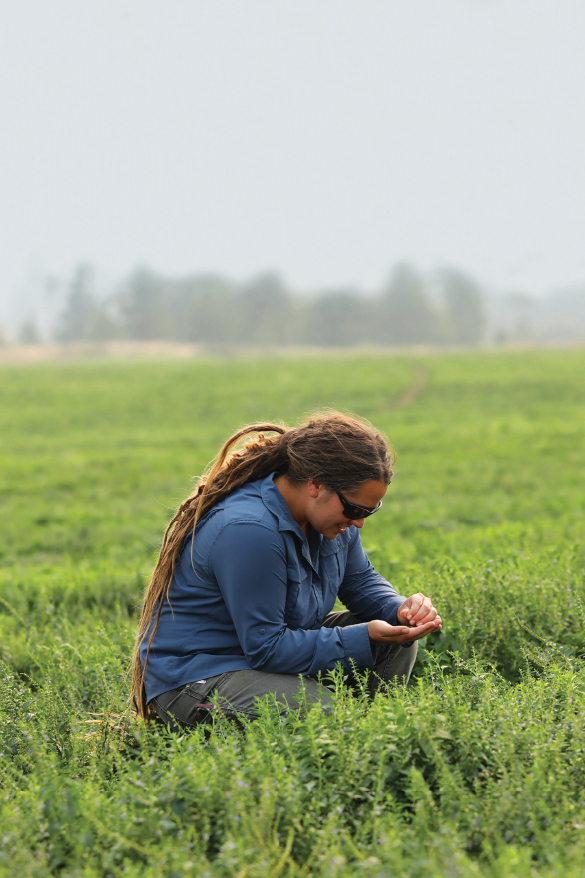
We are kicking off this series with an incredible partner we have been working with for over a decade. Danielle Kruse is the West Farm Manager at Trout Lake Farm in Washington and is responsible for growing some of the highest quality herbs that we offer. She was generous enough to take some time to connect with us about her journey in agriculture and share tips for others, especially women, interested in a career in agriculture.
Becoming a Farmer
Even in her younger years, Danielle had a special connection with plants. She wasn’t quite sure where her career might lead, but her passion for plants fueled a college degree in Biology with a focus in Horticulture at Western Carolina University. From there, Danielle got a job at a plant nursery and worked in four greenhouses where she was researching potting soil. This was pivotal for her, as it was here that she realized that she didn’t want to be confined to the greenhouse and that working in the field was an important aspect of her professional fulfillment.
Filled with a hunger to learn more, she began attending organic and sustainable farming conferences where she kept hearing a common theme—farming was a dying art; people are not wanting to do this kind of hard work anymore because it’s not financially lucrative. Danielle could have walked away from these conferences with a sense of defeat or doubt, but luckily for all of us, she didn’t. She knew she wouldn’t mind working hard for a job she loved, and wholly believed that she could make money doing it. She decided to take the next step forward and became an intern at Trout Lake Farm. After the internship ended, she was offered a job, and now, 17 years later, she manages 350 acres of organic herbs at Trout Lake.
It didn’t, however, come easily or without its own set of challenges. While Danielle had tremendous support from the Trout Lake Farm Leadership Team, it took time for her colleagues and industry peers to have that same faith in her. At the time Danielle started as a Farm Manager, she was also quite young; so not only was she having to prove herself as a woman in agricultural management, but she was also having to prove herself as a young woman in the industry. Through the process of building relationships and standing tall in her expertise, others began to see the same potential that Trout Lake Farm Leadership did. Would this have been a faster and smoother process if she had better fit the typical demographics of folks in that position? It’s likely. But this was her journey, and through all of the opportunities and challenges, she proved the importance of including women, and especially young women, as leaders in agriculture.
In fact, Danielle has seen more interest from women and young folks who are excited about becoming farmers than ever before. There is a cultural shift happening that is attracting these groups into the farming sector. The catalyst—more balanced hours and flexible scheduling. Work-life balance is a really important aspect of farming; this is especially true for those with families. By bringing on more workers, it allows for a better-balanced schedule for all, and is now becoming a growing art that more people want to be a part of. A direct pivot from the sentiment expressed at those conferences all that time ago.
What it Means to Be a Sustainable Farm Manager in the Health Industry
While each day presents its own set of needs and challenges, a good Farm Manager is thinking and working ahead. These days, Danielle is putting a lot of energy into compost operations to help improve soil biology and plant nutrition through natural and organic means. To her, one of the greatest and long-lasting innovations in farming is the increased attention to sustainability. We now know more about soil health, cover cropping, and biology than ever before, and consumers are helping to increase the demand for sustainably sourced botanicals. Even Regenerative Organic Certified® herbs and spices are becoming more accessible, and Danielle is actually in the process of helping Trout Lake Farm get their incredible botanicals Regenerative Organic Certified.
In addition to her commitment to sustainability, Danielle is working on communication and data improvements in farming, which is an often-forgotten aspect of this line of work. She is creating a system of information sharing that can be accessed in real time, from the field or office, which can help farmers increase the speed of decision-making. This system also aims to improve transparency across teams, which goes back to the cultural shift that is happening in the world of agriculture.
Farming is always changing; from technology upgrades to climate change, there is a constant flow of obstacles and improvements. Each season, week, day, and hour presents a unique set of needs. Yet, the bigger picture must inform each decision and action. This is especially true for farms that grow through organic and sustainable methods. The conscious farmer isn’t reactive—they are proactive in their approach, which then allows them to be mindful in their problem-solving. That is the essence of farming responsibly and successfully.
Danielle’s Advice for Women Considering a Future in Agriculture
-
Creating a work-life balance is incredibly important. This is especially true if you are starting your own farm. If we can make it more sustainable and find a work-life balance, there will be more of us to do the work. Many hands make lighter work.
-
Farming is more than growing food; it is relationship-building with nature. Remember that you are just as much a part of the ecosystem as the parts you are nurturing.
-
Don’t give up! Farming can be hard—some days it can be really hard. Perspective is really important, so finding the joy in being with the soil and the plants can make the difference between a fulfilling career and deciding to call it quits.
Explore Herbs Danielle Helps Grow for Mountain Rose Herbs
- Organic Burdock Root
- Organic Dandelion Leaf
- Organic Dandelion Root
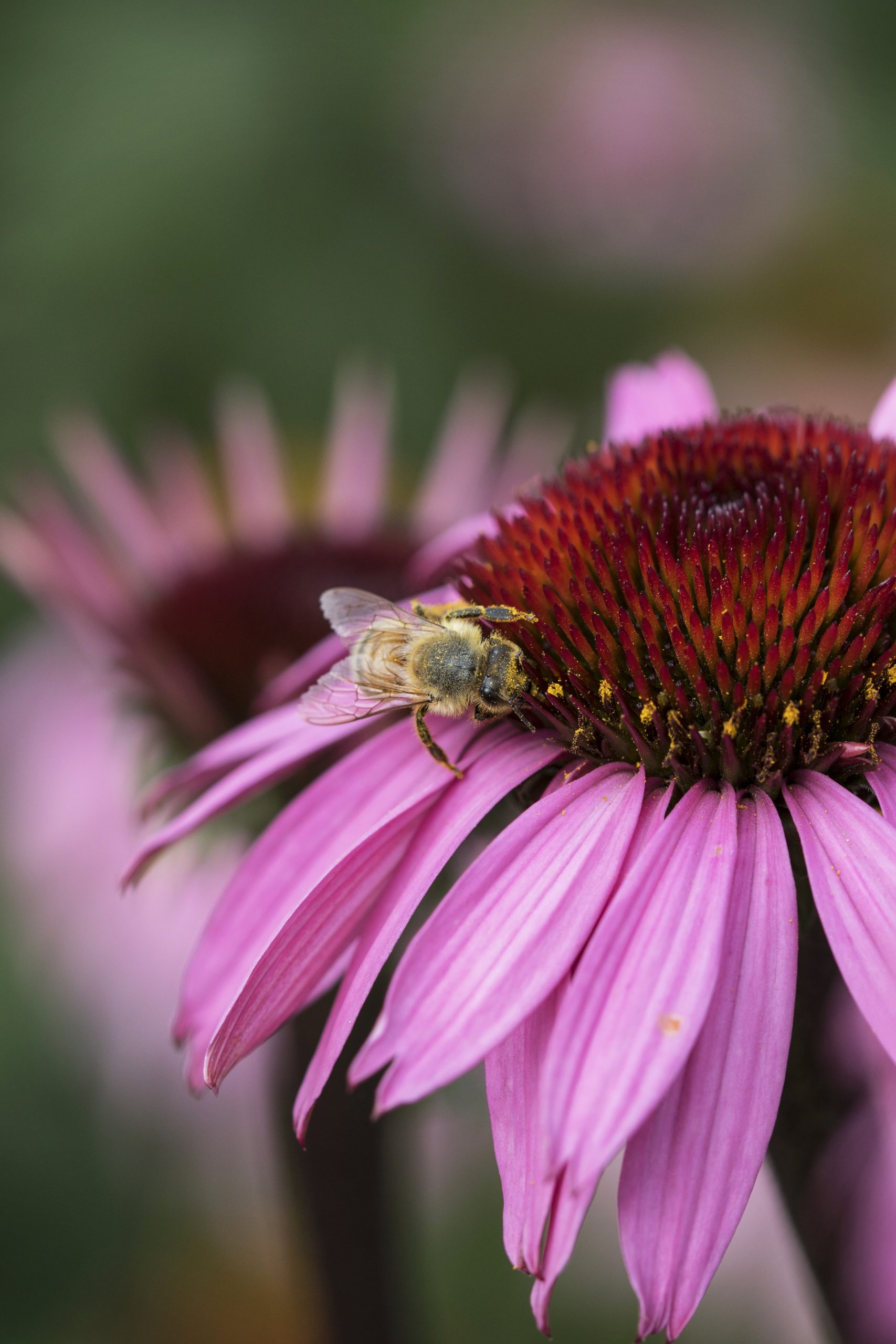
- Organic Echinacea Purpurea Root
- Organic Marshmallow Leaf
- Organic Marshmallow Root
- Organic Nettle Leaf
- Organic Oatstraw
- Organic Peppermint Leaf
- Organic Spearmint Leaf
- Organic Valerian Root